
Between Part 1 and Part 2, I have sent the samples away for testing. The results normally confirm what you can see. However it gives you a measurement, and some statistics that are very useful when deciding where to go with your herd. I am looking forward to the results. Mostly for cria number three of 2021: Kestle Trelawney.

Trelawney is the most beautiful pattern to watch in Kestle. The distribution of his colour is know as tuxedo, for obvious reasons. His fleece is definitively very fine, the staple is really long too. Outstanding lustre.
Someone mentioned he would make a really nice pet. He is unarguably very handsome. However his genetics are outstanding, so I am sure he will prove a superb stud… If the breeder knows how to play with the genetics of colours in alpacas. There are some references online about this. I will leave a couple of links at the end for those interested.
After registering him as a bay black multi, today I think his coat is a very dark brown, however someone assured he is actually grey. His first fleece shows dramatically the effect of the amniotic fluid on the fibre. The colour is lightened at the tips. After birth, the fibre keeps growing and looks darker underneath. That is his real colour. It is cool to see the change when you first shear a cria, sometimes to get a surprise as new unexpected colour reveals.
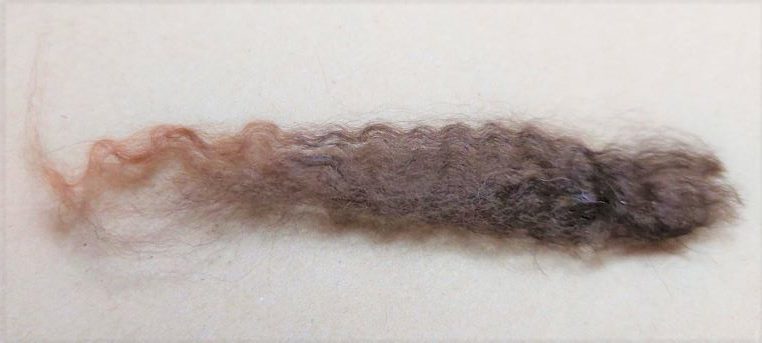
Trelawney is also a very strong male, both physically and his personality. He is determined to not to be handled since he was separated from his mum. Weaning is sometimes forced by nature, as in the case of Helium. With Trelawney, we decided to give his mum, Diamond Girl, a break – as she is currently pregnant and Trelawney was keeping her very tired-. She has put some weight on since separated, and he has not lost any. He is not impressed, though.
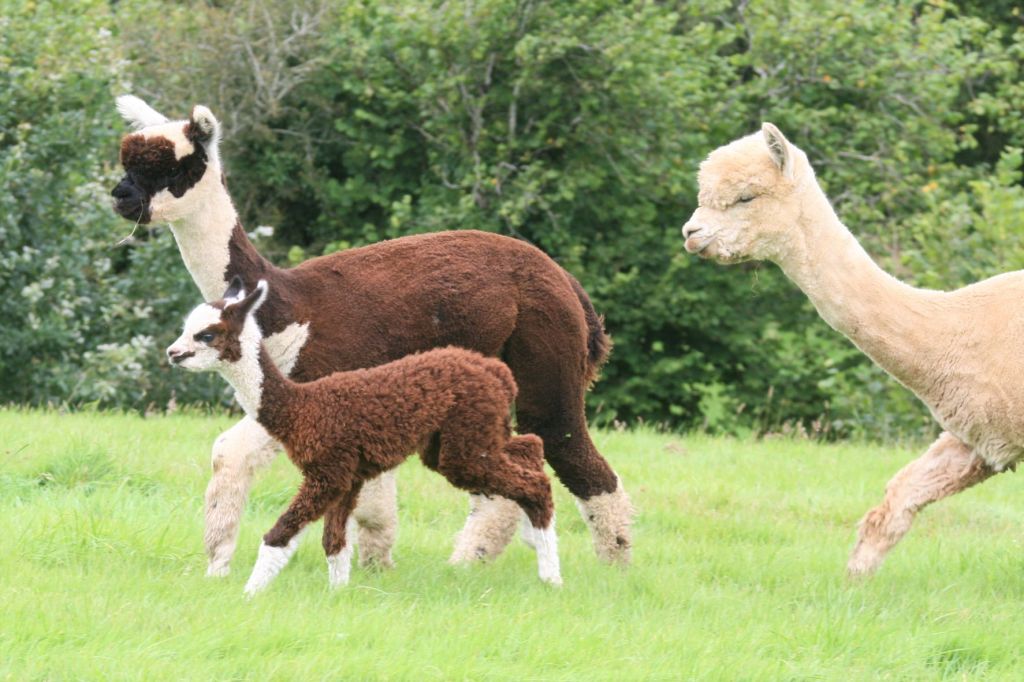
His dam is Diamond Girl. She is our number one fleece in the ring. She carries the gene of the white pattern you can see in Trelawney (known as a “white spotting gene”). His sire is a magnificent Inca Grey Jameson. So Trelawney will potentially produce grey progeny and if he didn’t, his fleece is superior quality for a pet. Breeding, when colour is a fashion or an issue, is not easy. You also have to be a responsible breeder. I will obviously observe and do my best with this boy -as I do with the other animals-, but I have a feeling he has a reproductive future.
**references for colour coding:
https://minifluffsrabbitry.weebly.com/alpaca-color-genetics.html
 Kestle Alpacas